domingo

Larry Clark


Larry Clark

Clark was born in Tulsa. He learned photography at an early age. His mother was an itinerant baby photographer, and Clark himself was enlisted in the family business from the age of 13.

In his mid-teens,Clark began injecting amphetamines with his friends in 1959. Always armed with a camera, from 1963 to 1971 Clark produced pictures of his drug-shooting coterie that have been described by critics as "exposing the reality of American suburban life at the fringe and for shattering long-held mythical conventions that drugs and violence were an experience solely indicative of the urban landscape."

Photography career

He attended the Layton School of Art in Milwaukee, Wisconsin where he studied under Walter Sheffer and Gerhart Bakker. He was drafted to serve in the Vitnam War. His experiences there led him to publish the book Tulsa in 1971. It was a landmark work: a photo documentary illustrating his young friends' drug use in black and white. His follow-up was Teenage Lust (1983), an "autobiography" of his teen past through the images of others. It included his family photos, more teenage drug use, graphic pictures of teenage sexual activity, and young male hustlers in Times Square, New York City. Clark constructed a photographic essay titled "The Perfect Childhood" that examined the effect of media in youth culture.

His photographs are part of public collections at several prestigious art museums including the Whitney Museum of American Art, and the Museum of Fines Arts, Boston


James Nachtwey


James Nachtwey , war photographer

James Nachtwey grew up in Massachusetts and graduated from Dartmouth College, where he studied Art History and Political Science (1966-70). Images from the Vietnam War and the American Civil Rights movement had a powerful effect on him and were instrumental in his decision to become a photographer. He has worked aboard ships in the Merchant Marine, and while teaching himself photography. In 1976 he started work as a newspaper photographer in New Mexico, and in 1980, he moved to New York to begin a career as a freelance magazine photographer. His first foreign assignment was to cover civil strife in Northern Ireland in 1981 during the IRA hunger strike. Since then, Nachtwey has devoted himself to documenting wars, conflicts and critical social issues. He has worked on extensive photographic essays in El Salvador, Nicaragua, Guatemala, Lebanon, the West Bank and Gaza, Israel, Indonesia, Thailand, India, Sri Lanka, Afghanistan, the Philippines, South Korea, Somalia, Sudan, Rwanda, South Africa, Russia, Bosnia, Chechnya, Kosovo, Romania, Brazil and the United States.

Nachtwey has been a contract photographer with Time Magazine since 1984. He was associated with Black Star from 1980 - 1985 and was a member of Magnum from 1986 until 2001. In 2001, he became one of the founding members of the photo agency, VII. He has had solo exhibitions at the International Center of Photography in New York, the Bibliotheque nationale de France in Paris, the Palazzo Esposizione in Rome, the Museum of Photographic Arts in San Diego, Culturgest in Lisbon, El Circulo de Bellas Artes in Madrid, Fahey/Klein Gallery in Los Angeles, the Massachusetts College of Art in Boston, the Canon Gallery and the Nieuwe Kerk in Amsterdam, the Carolinum in Prague,and the Hasselblad Center in Sweden, among others.

He has received numerous honours such as the Common Wealth Award, Martin Luther King Award, Dr. Jean Mayer Global Citizenship Award, Henry Luce Award, Robert Capa Gold Medal (five times), the World Press Photo Award (twice), Magazine Photographer of the Year (seven times), the International Center of Photography Infinity Award (three times), the Leica Award (twice), the Bayeaux Award for War Correspondents (twice), the Alfred Eisenstaedt Award, the Canon Photo essayist Award and the W. Eugene Smith Memorial Grant in Humanistic Photography. He is a fellow of the Royal Photographic Society and has an Honorary Doctorate of Fine Arts from the Massachusetts College of Arts.


Garry Winogrand


Garry Winogrand: ficciones del mundo real

Winogrand fue una figura controvertida a lo largo de toda su carrera. Nació en el Bronx de Nueva York el 14 de enero de 1928. En 1947 inició sus estudios en el City College de esta ciudad, pero muy pronto, en 1948, se apuntó a las clases de pintura que Henry Carnohan impartía en la Columbia University. Practicante y pionero de la fotografía callejera ("street photography"). Recibió tres Becas Guggenheim. Su trabajo se expone por primera cez en 1963 en el Museo de Arte Moderno (MOMA) de Nueva York. Se trata de una muestra colectiva en la que también aparecen trabajos de George Krause, Jerome Liebling y Ken Heyman. En 1967 expone junto con Diane Arbus y Lee Friedlander en la muestra "New Documents" en el MOMA.


Nan Goldin


Nan Goldin is an example of an artist who works at the most intimate level: her life is her work and her work, her life. It is nearly impossible to discuss Goldin's photographs without referring to their subjects by name, as though the people pictured were one's own family and friends. It is this intimate and raw style for which Goldin has become internationally renowned. Her "snapshot"-esque images of her friends -- drag queens, drug addicts, lovers and family -- are intense, searing portraits that, together, make a document of Goldin's life. Goldin herself has commented on her photographic style and philosophy, saying, "My work originally came from the snapshot aesthetic . . . Snapshots are taken out of love and to remember people, places, and shared times. They're about creating a history by recording a history”

Nan Goldin (1953), una de las fotógrafas norteamericanas más populares de los años 90, utiliza las fotografías para producir obras en las que borra los límites entre lo público y lo privado, lo femenino y lo masculino, poniendo en evidencia las relaciones emocionales ligadas a la sexualidad. En sus trabajos, ajenos a formalismos y a sofisticaciones técnicas, muestra la intensidad de la vida amorosa, de la sociedad y de la angustia.


Robert Frank


Robert Frank. El profético viaje de Robert Frank al corazón de EE UU


Americanos, personajes anónimos, capturados con naturalidad y productos todos ellos de la innata curiosidad del fotógrafo, que en ocasiones parecen extraídos de una novela de Truman Capote o de una pintura de Edward Hopper, se intercalan con imágenes urbanas o rurales, desoladas tierras aisladas inmersas en el silencio en las que el fotógrafo a veces consigue una composición geométrica gracias al juego de luz o al enfoque de los objetos. Como diría Jack Kerouac, autor del prólogo, “un triste poema de América plasmado en fotografía”. (El País)


Robert Frank, nació en el año 1924 en Zurich. Recibió la influencia de Cartier Bresson, Bill Brandt, Andre Kertesz (Europeos) y Walker Evans (americano). En 1947 deja Suiza y llega a New York. Desde 1969 vive en Canadá. A partir de 1955 recorrió durante dos años 48 estados de USA - gracias a una beca otorgada por la fundación Guggengheim- , en un auto viejo, retornando con un desolador, triste y monótono retrato de lo que las rutas americanas podían ofrecer. Este proyecto luego se llamaría "los Americanos". En el año 1996 recibió el Premio Internacional de la Fundación Hasselblad, Premio PHotoEspaña Baume et Mercier 2009.


Alec Soth


Alec Soth. El espacio entre nosotros

Alec Soth (b. 1969) is a photographer born and based in Minneapolis, Minnesota. He is the recipient of several major fellowships from the Bush, McKnight and Jerome Foundations and was awarded the 2003 Santa Fe Prize for Photography. His work is represented in major public and private collections, including the San Francisco Museum of Modern Art, the Museum of Fine Arts Houston and the Walker Art Center in Minneapolis. Soth's photographs have been featured in numerous solo and group exhibitions, including the 2004 Whitney and São Paulo Biennials. His first monograph, Sleeping by the Mississippi, was published by Steidl in 2004 to critical acclaim. Since then Soth has published NIAGARA (2006), Fashion Magazine (2007), Dog Days, Bogotá (2007) and The Last Days of W (2008). Soth is represented by Gagosian Gallery in New York, Weinstein Gallery in Minneapolis, and is a member of Magnum Photos.


Martin Parr


Martin Parr. Bored couples

Martin Parr (1952 Reino Unido).Su interés por la fotografía fue alentado desde niño por su abuelo, George Parr, un fotógrafo aficionado. Parr estudió fotografía en la Escuela Politécnica de Manchester de 1970 a 1973. A principios de los ochenta, su trabajo reflejaba el estilo de vida de la gente corriente en Gran Bretaña, reflejando el deterioro social y los problemas de la clase trabajadora durante el gobierno de Margaret Tahatcher. El sentido del humor es muy importante en su obra. Para Parr, es el modo de salvarse del ridículo y la decadencia en nuestra vida diaria. La banalidad, el aburrimiento y la falta de sentido de la vida moderna es plasmada en trabajos como "Parejas aburridas" y "Sentido Común". Es miembro de la Agencia Magnum desde 1994. En 2004 fue nombrado profesor de fotografía en la Universidad de Gales.En 2006 recibe el premio Erich Salomon. En 2008 recibe el Premio PHotoEspaña Baume et Mercier


Dan Eldon


Dan Eldon. Morir para contar: la desaparición de un gran fotógrafo en Somalia

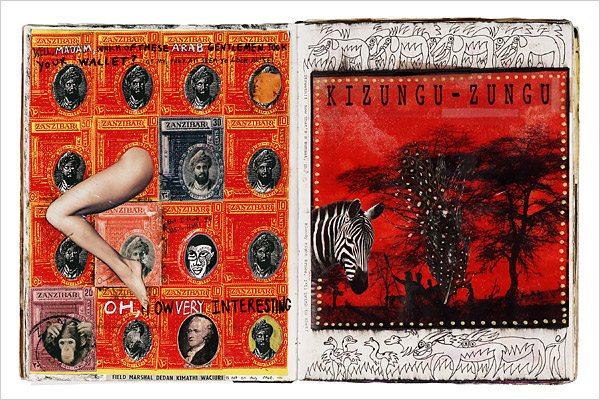
Born in London of English and American parents, Eldon relocated to Nairobi, Kenya, with his family when he was seven. A scrapbook assignment after a class trip to visit Masai tribesmen became the first of 17 extraordinary journals that he filled with photographs, drawings, personal observations and objects culled from an adventurous life. Eldon received his first photo credits at 14, while accompanying his journalist mother on newspaper interviews. Largely self-taught as a photographer, he worked in New York at 17 as a design intern for Mademoiselle magazine before returning to Africa to embark on a series of intrepid safaris.
Eldon’s many destinations are recorded in his journals with a wide range of styles and moods. “Constantly his pages asked and answered questions,” his mother, Kathy, explains. “The power of good versus evil, the role of violence in society, and the effect of war on humanity were recurring themes for him.”
After hearing rumors of famine in Somalia, Eldon went north to investigate. He was among the first to report on a situation that would “trigger the conscience of the world.”
During his time in Somalia, Eldon described seeing a gravely injured young girl, who, he was told, would never the less survive. “It made me think of the whole country,” he wrote. “Somalia will survive, but what kind of life is it for a people who have been so wounded. I don’t know how these experiences have changed me, but I feel different.”


Paolo Pellegrin


Paolo Pellegrin. "El acto de fotografias es un acto de violencia sobre el otro, pero también sobre mi mismo. Pulsar el disparados no es gratuito para mi. Me debo convencer de hacerlo".

Paolo Pellegrin, born in Rome, originally studied architecture before discovering his passion for photography. The subjects he pursues include immigration, AIDS, terrorism, slavery and voodoo. In 2006, he won the W. Eugene Smith Grant in Humanistic Photography for his project "Maktub - It is written. A journey through the lands of Islam."

Paolo Pellegrin estudió en el Instituto de Fotografía en Roma. Después empezó a trabajar como fotoperiodista internacional para distintas publicaciones. Entró en la agencia Magnum en 2001 y se convirtió en miembro en 2005.Actualmente trabaja para la revista Newsweek y vive entre Roma y Nueva York

http://blog.magnumphotos.com/paolo_pellegrin.html


Antoine d´Agata


Antoine d’Agata

"La fotografía es para mí una herramienta para vivir más. Mi vida es la noche, la droga, la prostitución. La fotografía me ha dado la posibilidad de seguir con esta vida y de explorar la forma más pura de documental que puede haber".


Francés, nacido en 1961. Antoine d’Agata abandona Francia en 1983 para pasar diez años en el extranjero. Cuando vivía en Nueva York en 1990, su interés por la fotografía le lleva a matricularse en el Centro internacional de fotografía, donde tiene como profesores a Larry Clark y Nan Goldin. Después de trabajar en la agencia Magnum Photos de Nueva York entre 1991 y 1992, Antoine d’Agata vuelve a Francia al año siguiente y deja la fotografía durante cuatro años. En 1998, se publica su primera obra, De Mala Muerte. En 2001, publica su segunda obra, Hometown, con la que gana el premio Nièpce. En 2003, se inaugura su exposición 1001 Nuits en París, paralelamente a la publicación de los libros Vortex e Insomnia. En 2004, se incorpora a la agencia Magnum Photos y publica su quinto libro, Stigma. En 2005, abandona Francia para recorrer el mundo y desde entonces trabaja en un proyecto personal sobre la vida nocturna, en particular en el Japón, donde ha rodado su primer largometraje, Aka Ana.


Alex Webb

Alex Webb, de profesion: observador paciente. «Elegí trabajar en lugares como la frontera de México o Estambul porque es allí donde el mundo se manifiesta intenso, donde existe esa tensión cultural que te conecta de forma visceral con la realidad»

Alex Webb se interesó en la fotografía durante sus años de escuela secundaria y asistió a los Talleres Apeiron en Millerton, Nueva York, en 1972. Aunque tuvo su primer contacto con la fotografía apenas siendo un escolar, gracias a su padre, escritor que realizaba fotografías callejeras y retratos informales como método para despejarse de la literatura o, simplemente, como actividad creativa para recuperar la inspiración.

Webb se especializó en historia y literatura en la Universidad de Harvard, al mismo tiempo que estudiaba fotografía en el Carpenter Center for the Visual Arts.

En 1974 comenzó a trabajar como fotoperiodista profesional y se unió a Magnum Photos como miembro asociado en 1976. A mediados de la década de 1970, Webb fotografió en el sur de Estados Unidos, documentando la vida de una pequeña ciudad en blanco y negro. También comenzó a trabajar en el Caribe y México.

En 1978 comenzó a fotografiar en color, como ha seguido haciendo.


http://www.elpais.com/articulo/ultima/Existe/tercer/pais/EE/UU/Mexico/frontera/elpepiult/20091120elpepiult_2/Tes

Alessandra Sanguinetti


Alessandra Sanguinetti "Desde niña estuve envuelta en un mundo de fotografía, con libros, y siempre fotografiando"

Alessandra Sanguinetti nació en Nueva York en 1968. Vivió en Anrgentina del 1970 al 2003. Actualmente vive en Nueva York. Sanguinetti ha recibido la Guggenheim Foundation Fellowship y la Hasselblad Foundation Gran. Representada por la Galería Yossi Milo de Nueva York y Ruth Benzacar en Buenas Aires, sus fotografías están incluidas en colecciones públicas y privadas como el Museum of Modern Art, Nueva York, el San Francisco Museum of Modern Art, el Museum of Fine Art, Houston, y el Museum of Fine Arts, Boston. En 2006 publicó su primer libro ¨On the Sixth Day¨ (Nazraeli Press). Sanguinetti ha fotografiado para revistas como The New York Times Magazine, LIFE, Newsweek, y New York Magazine. En 2007, Sanguinetti entró en la agencia Magnum como "nominee".

http://alessandrasanguinetti.com/